welcome to TECHNO WORLD

Monday, 18 March 2013

BMW’s New Innovative Connected Drive Concept for Future


Computer and communication technologies are proving important in helping motorists drive more intelligently and efficiently. These high-tech strategies are increasingly being used to complement the fuel economy and emissions reductions brought by improved powerplants and vehicle electrification. On the way to the federally mandated fleet fuel economy average of 54.5 mpg, all strategies and efficiency technologies become important.
Like many other automakers,  the BMW Group is investing large amounts in Intelligent Transportation Systems (ITS) technologies to make traveling  more efficient, safer, and more convenient. Recently, the BMW Group presented some of its latest innovations that are part of its BMW ConnectedDrive.


BMW’s Mobility Assistant, currently being tested in Berlin, can help travelers chose the best way of traveling to a destination, especially in a congested city. This iPhone app can provide information on a variety of transportation options. When a destination is entered, the Mobility Assistant displays various routes to reach the destination cost-effectively and quickly – whether by car, public transportation, or a combination of modes.
Finding a place to park can waste fuel and time. BMW’s ParkatmyHouse and ParkNow provide an answer by making it easier to locate parking spaces. ParkatmyHouse is for entrepreneurs and homeowners who want to rent parking spaces, with ParkatmyHouse parking spaces at more than 20,000 locations in the United Kingdom and over 150,000 registered drivers using them. With ParkNow, drivers can book parking spaces in advance through the ParkNow website or by using the ParkNow App for smart phones. There are currently 14 ParkNow locations in the San Francisco area.


The ability to travel in city traffic without constantly stopping and starting at traffic lights means calmer and safer driving while saving fuel and reducing emissions. BMW’s Traffic Light Assistant communicates with traffic lights to obtain and evaluate their timing, and then informs a driver about the optimum speed to match traffic light timing. For instance, if the light at the next intersection is projected to be red if the driver doesn’t change speed, the driver would be informed early enough to brake smoothly.
Getting stuck in a traffic jam can waste lots of fuel, not to mention being a source of frustration and  even lead to road rage incidents. ConnectedDrive-equipped BMWs with RTTI (Real Time Traffic Information) provides drivers with the latest information about traffic conditions, enabling drivers to select routes with less congestion, thus saving time, emissions, and fuel.    


Updated every three minutes, RTTI indicates five levels of traffic flow including flowing normally,  slow-moving traffic, heavy traffic, congested, or gridlocked.
BMW is also developing BMW ConnectedRide, a version of BMW ConnectedDrive for BMW motorcycles. Currently, the emphasis is on safety with features like Left Turn Assistant, Traffic Light Assistant, Collision Warning, and Traffic Sign Recognition. The motorcyclist would be alerted about adverse weather conditions like fog, rain, snow, and ice, which are all much greater hazards for motorcycle riders. The cyclist could also be warned about other hazards like an oil slick, loose gravel, potholes, or an obstacle in the road. Warnings could be presented via a heads-up display in the windscreen.


Sunday, 10 March 2013

The History of ' !OS ' Jail Breaking and world wide Participants of famous Jail Breakers .


Back in 2007, Steve Jobs used a famous quote from ice hockey player Wayne Gretzky to summarize Apple’s commitment to innovation: “I skate to where the puck is going to be, not where it has been.” That’s long been true for Apple and products like the iPhone and iPad. But for more than four years, jailbreak has pushed the boundaries of iOS even farther.

If Apple skates to where the puck is going to be, then jail breakers have usually already been there and left. The hackers and tinkerers that find security loopholes in Apple’s software are some of the most brilliant, innovative minds in the tech world.
We’ll be covering Jailbreak Con 2012 this weekend in San Francisco, the world’s first convention dedicated solely to the jailbreak community. What better way to get ready for the future of jail breaking than to examine the past? Let’s start from the beginning:

What Exactly Is Jailbreaking?
For those who don’t know, “jail breaking” is the process of gaining root access to the iOS platform, effectively ‘breaking out’ of the restrictions Apple puts in place. You can then install apps that haven’t been vetted by Apple and tinker with the OS itself. Unlike Android, iOS is by default a walled garden. You’re supposed to play by Apple’s rules. Apps aren’t allowed to interact with iOS at the core level, and you can’t add to, remove, tweak, or enhance aspects of the operating system. That’s where jail breaking comes into play.

“Gaining root access to the iOS platform, effectively ‘breaking out’ of the restrictions Apple puts in place”

Jail breaking is free and legal in the United States and many other countries. When you jailbreak an iOS device like an iPhone, you gain access to Cydia, the jailbreak version of the App Store. (More than that later.) In recent years, the actual process of jail breaking has become pretty easy and straightforward. To jailbreak an Apple device, you usually need a desktop computer to administer the hack.
Since the original iPhone’s release back in 2007, jailbreak hackers and developers have been cracking new versions of iOS only to have their work later patched by Apple.
The Early Days


We all know about iPhone Dev Team , we have heard about Chronic Dev Team who created the famous GreenPoison Jailbreak for iPhone 4 [for iOS 4.1 and later] . Few names we hear quite often like MuscleNerd , Geohot , Sherif Hashim. Have you ever seen the guys who are behind all the jailbreak and unlock tools you use . This post will reveal the hot shots of the jailbreaking world  .


Lets start with GeoHot . George Francis Hotz, alias geohot was the first ever iphone jailbreaker and unlocker to bring the unlock solution at the age of 17 . [purplera1n year 2009 , blackrain year 2009 and the latest limera1n year 2010 ] .


Recently got himself into some serious trouble with electronics giant Sony over PlayStation 3 Jailbreak [ Read the whole story here]. Dont miss watching his Rap Video we have posted earlier. The guy is a professional rapper . CNN Covered the News back in year 2009 – watch the YouTube Video below .


MuscleNerd : Wow Muscles , Follow him on twitter @MuscleNerd .


The hairy dude you see here is Jay Freeman aka Saurik , the creator of Cydia [The jailbreak App Store ]. His twitter handle @Saurik


PlanetBeing : The first guy ever to reveal the world’s first carrier unlocked iphone 4 . Follow him on twitter @planetbeing


Sherif Hashim : The Egyptian iphone baseband hacker is a Neurosurgeon by professional . Follow him on twitter @Sherif_Hashim


Comex : The 19-Year Old iPhone Hacker Who Keeps Outsmarting Apple. He was recently interviewed by Forbes Magazine .


If you have more images of Dev Team Jailbreaks , do share with us . We will be happy to post it with due credits to the contributor . I you want to add and contribute extra information not listed above , I will be happy to receive and publish it in this post . Do Share this article and Support the Jailbreak Team for their hard work and dedication to serve the iphone users community .

Update : Here is a get together by jailbreak team in the recently held DefCon Conference for hackers and programming enthusiast from around the world . We can only identify three of them , JayFreeman , P0sixNinja (in green) and Geohot . Guess who are the rest . The image has been cropped to fit the width of the page .


Update 2 : This picture was taken few hours before the Hackers Developers conference . Featuring Chronic De Team on their way to HITB conference to deliver keynote on exploit being used in Absinthe 2.0 Jailbreak .


Left to Right : @pimskeks @iOPK @pod2g @p0sixninja and @planetbeing


Saturday, 9 March 2013

HYBRID MEMORY CUBES are coming to replace the small volatile unit's giant accessory unit's a prototype is already ready .


           DDR1, DDR2 and DDR3 these are the types of Rams released in the market till now. Every Ram is same in there Shape and also same in the functionality but the thing is there is a drastic change in the frequency of the Rams. As the architecture changes the manufacturing cost of the Rams also decreases this we can see by comparing the cost of three different Rams for DDR1 cost of 512MB used to be 1000 above then as the DDR2 launched there is some decrease in the cost. Now the cost of 4GB DDR3 is just 1100 rs and also it gives the high performance.
                But now the thing is as Multi - core processing is bringing incredible changes to super computing and advanced networking systems, advances that will require a new level of memory efficiency and performance. The next upcoming Ram's have entirely new architecture that maximizes the full potential of these high-performance systems.These Rams are developed by Micron.


What is HMC?
   At the core of the HMC is a small, high-speed logic layer that sits below vertical stacks of DRAM die that are connected using through-silicon-via (TSV) interconnects. The DRAM has been designed solely to handle data, with the logic layer handling all DRAM control within the HMC. System designers have the option of using the HMC as either "near memory," mounted directly adjacent to the processors for best performance, or in a scalable module form factor as "far memory," for optimized power efficiency.


The Real Difference is in the Cube


HMC will provide a revolutionary performance shift that will enrich next-generation networking and enable exaflop-scale supercomputing:


Increased Bandwidth — A single HMC can provide more than 15x the performance of a DDR3 module.


Power Reductions — HMC is dramatically more efficient than current memory, using 70% less energy per bit than DDR3.


Smaller Physical Systems — HMC’s stacked architecture uses nearly 90% less space than today’s RDIMMs


NVIDIA's Project shield- A Gaming Portable for open platform with 4.1 Jelly Bean, Android Blood consists


              This is a gaming console unveiled by NVIDIA in CES 2013. After the Tegra 4 processor announced by the NVIDIA which is the fastest mobile processor in the world has revealed its new gaming device Project Shield. 


           So, first let us know what Project shield is. It is a gaming console which runs with the operating system of Android 4.2.1 Jelly Bean, Which mean you can play all the Android games available on the Google play. It also provides a wireless connectivity between PC and the console for the the streaming of steam games. When we come to display it is of 5 inch screen with a resolution of  1280 x 720 retina multi touch. 

        It simply looks like a tablet of phone attached to a console controller. If you are not satisfied with the given resolution then you can connect it to a external Displays through HDMI ports available at the backside of the console. The above image shows the port which are available for the console. There is one HDMI, USB and 3.5 mm audio jack. The HDMI port supports upto a screen resolution of 4k. It also contains build in speakers.


As it runs with Android 4.2 Jelly Bean you can enjoy the large range of games which are on Google Play. You can support any game on Google play, it supports maximum all kinds of games and the controls are with touchscreen and the controller. You can also use Facebook and listening to music or watch a movie from the Google Play. 


Launching and price :

There is no information about the launch date but it may be launched in USA in Q2 of this year. When we come to pricing, NVIDIA has not yet revealed such information but comparative to other handheld gaming consoles this is much different. So, expected to be cheaper than the other competitive gaming consoles

This is just a gist about this amazing device, we will come to you with more complete review after its release in second quarter of 2013. Share your views about this console in below comments.


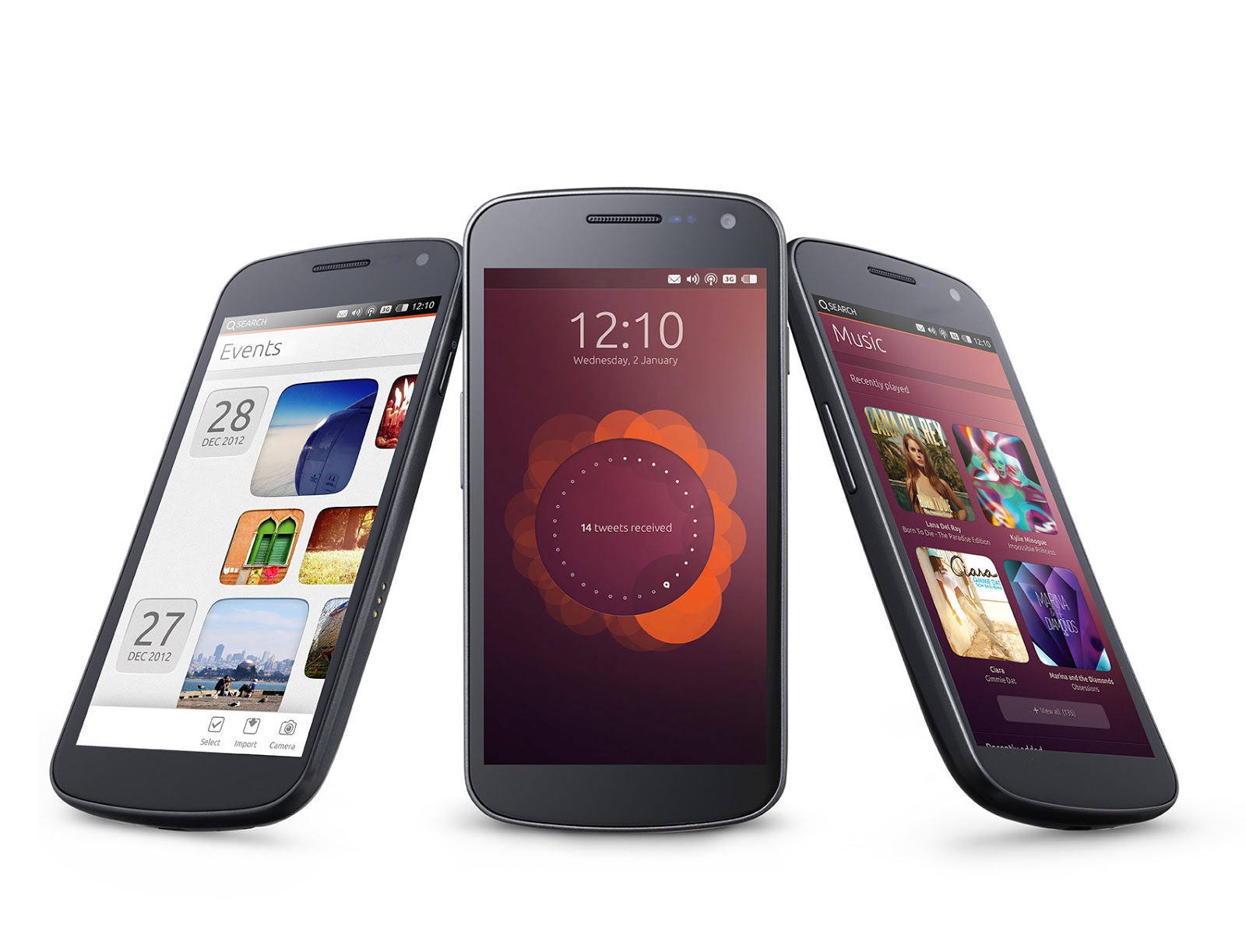
UBUNTU'S GESTURE - BASED PHONE OS, FIRST LOOK AND HANDS ON


 This is all about the open source software provider Ubuntu's Brand New OS for smart phones. This is quite interesting that a mobile OS from Linux. This OS is stylish and has some extraordinary features. It is completely different from the other mobile Operating Systems and this is the new gesture based OS. But it lags when we try to swipe to different screens, overall its attractive and different from all the top mobile operating systems in the world. It doesn't contain any button on it including the home button is also absent. So this says that the phone is completely operated only using gestures.


        To access the files or to select any app you just need to swipe in from the corners of the mobile. There is no lock screen, you can directly access anything just swiping in and it opens different functions from different corners.  For example if you swipe the mobile from top to bottom you can see the messages which you received or the usage of the battery and the connectivity settings etc. When you swipe from the right you can see the recently used apps. So here everything is done just by swiping the screen

        It is lagging little bit but as it is the developers version of the OS, but is an attractive OS. This little lagging is not much to be considered and you can see these phones to be out in 2014 but some of the features like this which is similar may be seen in the upcoming Android in Nexus and will be out in 2013.


WATCH YOUTUBE VIDEO'S WITHOUT BUFFERING ON SLOW INTERNET. HOW TO ?


This is a common problem which maximum internet users face. Few years back i used to have a very slow internet connection where i felt so irritating watching videos on you tube as it buffers for a long time. Many readers even asked me about this. So, as i search a lot for new stuff i finally found a wonderful solution which brings an end to all these problems. I want make this trick a public as many internet users like me get benefit and can enjoy the you tube videos without buffering.


 Now, coming to the actual point. The main question many people have in there mind is that how to watch you tube videos without buffering with slow net connection ? For this we have simple trick before that as we know you tube is a video's sharing site when millions of videos will be uploaded and watched by visitors. It provides its service to the registered as well as non registered users its mean the videos are completely public and can be viewed without any cost.

Just follow the below steps for the solution :


The buffering can be stopped by using “YouTube feather beta” .
By using this, it disables all the button the you tube like share button, add to or the like button etc.
Even the suggested videos towards the right side will not be loaded completely.
To activate this on your browser just go to : www.youtube.com/feather_beta and click on the Join the "Feather" Beta.
Once you complete this now you can view the you tube videos without buffering


Any futher queries please feel free to comment below


smartphone comparison infographic with 4 major ruling OS's in present scenario

To see the complete comparison of  this infographic picture you must download and zoom that. due to some reasons of Internet speed of other user's and Graphical quality the aspect resolution is not going to change by increasing of size of this infographic post by  Admin. so please excuse for the high resolution  zoom less post ,guys  . :P

A smartphone is a mobile phone built on a mobile operating system, with more advanced computing capability connectivity than a feature phone.The first smartphones combined the functions of a personal digital assistant (PDA) with a mobile phone. Later models added the functionality of portable media players, low-end compact digital cameras, pocket video cameras, and GPS navigation units to form one multi-use device. Many modern smartphones also include high-resolution touchscreens and web browsers that display standard web pages as well as mobile-optimized sites. High-speed data access is provided by Wi-Fi and mobile broadband. In recent years, the rapid development of mobile app markets and of mobile commerce have been drivers of smartphone adoption.
The mobile operating systems (OS) used by modern smartphones include Google's Android, Apple's iOS, Nokia's Symbian, RIM's BlackBerry OS, Samsung's Bada, Microsoft's Windows Phone, Hewlett-Packard's webOS, and embedded Linux distributions such as Maemo and MeeGo. Such operating systems can be installed on many different phone models, and typically each device can receive multiple OS software updates over its lifetime. A few other upcoming operating systems are Mozilla's Firefox OS, Canonical Ltd.'s Ubuntu Phone, and Tizen.

Auther : H@R!


Cloud Storage brief view of infographic picture


Cloud storage is a model of networked online storage where data is stored in virtualized pools of storage which are generally hosted by third parties. Hosting companies operate large data centers, and people who require their data to be hosted buy or lease storage capacity from them. The data center operators, in the background, virtualize the resources according to the requirements of the customer and expose them as storage pools, which the customers can themselves use to store files or data objects. Physically, the resource may span across multiple servers. The safety of the files depends upon the hosting websites.
Cloud storage services may be accessed through a web service application programming interface (API), a cloud storage gateway or through a Web-based user interface.

Auther : H@R!


An Overview of Microsoft by infographic picture


Microsoft Corporation is an American multinational software corporation headquartered in Redmond, Washington that develops, manufactures, licenses, and supports a wide range of products and services related to computing. The company was founded by Bill Gates and Paul Allen on April 4, 1975. Microsoft is the world's largest software maker measured by revenues. It is also one of the world's most valuable companies.

Auther : H@R!


Friday, 8 March 2013

10 Best Android Applications for Students


There is a vast development in the technology with various advanced gadgets and innovations. Every day there are lots of innovations in the technical market that make your work efficient and simple.


The Android Authority is releasing thousands of applications every day which are useful in daily life. These apps are especially developed for Android Smartphones. These apps are of different categories such as Gaming, Entertainment, Puzzle, Education, Action and many more. These different categories of apps are useful in different ways. Apart from these, Android has designed the apps to provide assistance for college students.

Here are some apps useful for college students to carry out their work and help them prepare for exams.


1. WikiDroid for Wikipedia: This is the finest application that can deliver the information you needed on any topic. You can say it is a source of information. You can directly view the information on the phone. This app formats the article in such a way that users can read well and it shows all features and browse history.

2.  Document Scanner: It is the vast application downloaded and used by many users. You can save all your notes and project work in this application. It will help share notes with you like a helpful friend. It can scan all the documents that are in different formats like PDF and Publisher. It is a useful app for all the students.

3. Evernote: This app is the important for the students who wish to save a copy of notes and snapshots of the projects. This is the most downloaded and award winning application. You can use the notes and documents whenever you need them. You can also record the lectures and instantly take photos of your projects and schoolwork.

4. Course Pro: This app will help you sort out your homework and will allow you to save your assignments and grades. It can perform well and give out more results that are efficient. You can also keep track of your studies and can plan and schedule your studies. With this app, you can also prepare before the exams and do well.

5. Grades Student Organiser: This app gives you the best grades and better results. It is especially designed to keep track of your studies and class schedules. It has different sets of application like To-Do, Calendar, Courses, Utilities, Profile and can lock your application. It will provide you the information about classes and professors with all courses.

6. AndroClass: This is a helpful application or you can say it works like a teacher because it helps you in your studies and notes. It is a professional application, which keeps track of all your assignments, projects, exams and grades. You can get the accurate information about all your notes. It is especially designed for Smartphones.

7. Class Buddy: Student Planner: This is a popular app while manages all the schedules and tasks for the busy students. You can organise and complete your tasks from each semester with all the course details. It can manage all the events like assignments, meetings, quiz and exams. You can also check your scores and grades with the help of this application.

8. Studious: This is the special application, which saves your notes. Now you can avoid your bulgy notebooks and bags while going to college. This app will manage all the notes and it also reminds you about home works and assignments. You can also create a URL and locate your campus with the help of maps. You can also attach the files and tag it to your friend’s mail.

9. Student Timetable Helper: This is the best application for the students as it helps throughout your studies. You can manage your timetables for the exams and can prepare yourself for the exams. It has the different options in its menu like copy paste, dictionaries, archives and browser. It provides you with the classes, notes, with different subjects and lessons.

10. Daily Lesson Planner: This application is the stand-alone version as it supports for 10 classes and 6 terms with different languages. This app is designed for both phones and Tablets. You can also email your notes to your friends and buddies and can email yourself with all the details of the date and time. You can also track all the daily activities which are scheduled.

The above are the finest apps, which can guide the student throughout college, and thus, they are worth the purchase. These apps are flexible with phones and tablets and in using this, you need to have android phone or tablet. If you fall short of money then you can opt for cash payday, as this is the instant loan provided without any deposits and contracts.

Auther : H@R!


How to Get Twitter Followers with Vine – the 6 Second Video Wonder


We all know that Twitter was up to something when they grew silent for a few months. There was no news on any upgrades or acquisitions. In fact, it was Facebook that made the noise about privacy updates and other features they were cooking up to secure their business partners.


But suddenly Twitter took the stage introducing a revolutionary way of using video to capture audience interest. The Vine is a stand-alone video app that paves the way for new and exciting way to utilize video into showing people a 6-second snippet of somebody else’s life.

Do you know how else this video app can help the online community – especially the marketers? It gives them the advantage of branding that has a higher propensity to stick to the minds of viewers.
But the most beneficial gain that this Vine brings is its strong pull to the Twitter community, which translates to getting Twitter followers.

So how do you utilize Vine to get Twitter followers?

Product Demonstrations

Indeed, no one say that product demos should be a minute long or worse. Creating a 6-second video to demonstrate new features entices curiosity and wonder. It compels the viewer to check out the product or the particular feature showcased on the video. Won’t that be an awesome way to drive traffic to your website or video? Not to mention, you’ll get a lot of curious followers of followers following you. Whew! That’s a lot of follows.
The disadvantage, however, is on the likelihood that your product is so complicated a minute wouldn't be enough, how much more 6 seconds?

Event Teasers or Sneak Peek

Tweeting something like, “Watch out for the greatest fashion show on Earth!” doesn’t seem to cut it nowadays. People seem to have immunity against hyperbole and other superlatives to any event announcements. Why? It’s because everybody is doing it, even to the most useless and boring events.

With Twitter, you can never tell whether these organizations are telling the truth until you click on the link and arrive at an all white-splashed cyber wall of micro-texts and hideous photos. Vine can ease the burden from tweeters’ shoulders as well as provide your events the right kind of exposure they are due.

Contest and Promotions

Holding a contest is easy but getting people to join is not. You can barely nudge these tweeters to spare a few seconds of their time to sign up and do what you want them to do. But given the right tool, the fun and the incentives, who can resist right?

Using Vine for personal consumption is already fun, how much more when you get to win something out of doing the thing you love – Vineying (excuse me, if I call it that). Twitter users who learn of your contest, will not hesitate to follow you for a chance to join your contest. It would also fire up their creativity and would provide you a host of Vine videos for product promotions.

Vine is a smart acquisition of Twitter up to par with Facebook’s Instagram. It provides a unique way for companies to brand and other ingenious ways to pursue marketing and lead generation, which of course starts with getting Twitter followers.

Are you using Vine? If yes, for what purpose?

Feel free to drop a comment, if you can think of something to add in using Vine to get Twitter followers.

Auther : H@R!


Yahoo, eliminates telecommuting for all workers. and cancelled working from Home or outside.


Yahoo could have developed collaborative work spaces off-site.
The recent decision by Marissa Mayer, chief executive of Yahoo, to eliminate telecommuting for all workers brings her company back in line with most of corporate America, in which working from home is more illusion than reality.
Although many – some estimate most – American jobs could successfully be performed at home, only roughly 16 per cent of American employees actually telecommute in any given year. That figure is reached only by using a very generous definition of telecommuting: working from home at least one hour per week.The idea behind the Yahoo announcement, as well as a more limited announcement from Best Buy this week that will add restrictions to its telecommuting policy, is that bringing workers back to the office will lead to greater collaboration and innovation. This is despite numerous studies showing that telecommuting workers are more productive than those working on-site.
Yet a work-force culture based on long hours at the office, with little regard for family or community, does not inevitably lead to strong productivity or innovation. Two outdated ideas seem to underlie the Yahoo decision: first, that tech companies still can operate like the small groups of 20-something engineers that founded them, and second,


The most old-fashioned of all, that companies get the most out of their employees by limiting their autonomy.Consider the reality of telecommuting in the United States: Most of the telecommuting hours put in by managers and professionals occur after they have worked at least 40 hours at the office. For them working from home means checking email, returning calls and writing reports during evenings, weekends and vacations.
I suspect that Yahoo is not keen on eradicating that type of telecommuting, which increases work hours and squeezes ever-greater productivity from workers. Its change was aimed at eliminating the type of telecommuting that substitutes for time spent at the office and that gives employees the opportunity to avoid long commutes and design their work hours around family or community obligations.

Why are companies so leery of this type of flexibility? Managers are tempted to use “face time” in the office as the de-facto measurement of commitment and productivity. They often are suspicious about employees who work out of sight, believing that they will shirk or drift if not under constant supervision. As a result telecommuting is often viewed as a perk to be handed out only after employees have proved their worth.

Another important reason, however, may be the difficulty of developing reliable metrics to measure the performances of employees who work at home, especially when they are involved in team projects. We tend to attribute quality work to those we see all the time and with whom we discuss work performance and accomplishments.

This belief may be especially strong at tech companies, whose heady early days of creative innovation suggested that living at the office with your young peers produced the fastest results. What we tend to forget is that many unsuccessful tech companies also started that way, and that even the successful ones eventually had to grow beyond the boundaries of a group of friends pulling all-nighters of inventive exploration, getting a new platform or search architecture to work.

After all, Yahoo now has 14,000 employees. It’s hard to imagine that all of them have a mission to innovate and create new processes and products. These are customer-service representatives, technical-repair workers. Does Yahoo really want them creatively innovating, going off script with untested solutions?

Regardless, employees, creative or not, get older, marry, bear children, watch their parents grow infirm and want lives outside the workplace. Despite companies’ best efforts to replace family and simulate home life by providing cafeterias, game rooms and concierge services for dry cleaning, most people eventually learn the hard way that companies will not care for you when times are hard. They will cut your pay or forgo your 401(k) match in economic downturns, and will dispose of you when you become ill or disabled.

As Robert Frost reminds us, home is the place where they have to take you in. Work is not that place.

In the past week I have heard a number of claims that research supports the idea that workers on-site are more innovative than those who work from home. I remain skeptical. The notion that impromptu conversations with colleagues in the cafeteria are the core of innovation seems a bit simplistic. In my experience they are equally likely to produce talk of better jobs at competing firms or last night’s “American Idol” winner. Besides, much of this “research” simply shows that workers who collaborate with others in loose networks generate better ideas. It doesn’t suggest that the best way to create new products and services is by isolating your employees in the silo of a single location.

It is no coincidence that some of the most successful engines of innovation in our economy are our great research universities. I have never seen a single university administrator try to corral faculty members into more face time at the office. Instead researchers are encouraged to travel to conferences to meet with peers and find out the latest developments in their fields, and to use technology to maintain contact with a web of associates around the globe who can be mustered on demand for consultation and support.

To give one small example, two of my colleagues, a demographer and a geographer at Cornell University, recently came up with the idea for a study to improve the retention of women working in science while chatting during their children’s after-school swim lessons. Even within Cornell, stuck in their respective units, they might never have met. The logic that insists that the best new ideas come from staying within one’s company walls as long as possible sounds like a return to the corporate groupthink of an earlier era.


Were there other ways to foster collaboration within Yahoo? Of course. Mayer could have insisted on core work hours or days for all employees, when everyone works on-site. Yahoo could have developed collaborative work spaces off-site, closer to the neighborhoods where telecommuting employees live, to provide them with opportunities to connect to others doing similar work. Large screens to Skype in telecommuting team members for daily or weekly meetings could be a routine part of every group space.

Above all, managers could focus on a results-oriented system of evaluation for all employees, telecommuting or not. This sends the message that outcomes are more important than location or hours on the job.

If the Dilbertization of Yahoo actually improves innovation, I’ll change my tune. Companies such as Yahoo will not get more out of their employees by watching them like hawks and monitoring their every move, however. Nor can they recreate the dynamism of their founding moment by trying to return to a perpetual organizational adolescence.

The 37-year-old Mayer, a new mother, may have yet to learn that.

Auther : H@R!


Thursday, 7 March 2013

By Google announce : "F-Secure can say that anything is malware "


F-secure report said, In the fourth quarter alone, 96 new families and variants of Android threats were discovered, which almost doubles the number recorded in the previous quarter. 

F-secure report said, In the fourth quarter alone, 96 new families and variants of Android threats were discovered, which almost doubles the number recorded in the previous quarter.

As the popularity of Android has boomed, more and more malware is targeting the platform. Digital miscreants are using fraudulent developer accounts on Google's Play marketplace to spread malware.

According to latest Mobile Threat report from F-Secure, Android malware continued to gain in share in 2012 and was responsible for 79 percent of all threats for the year, up from 66 percent in 2011, but Google responded with,"F-Secure can say that anything is malware".

According to official Google figures, there are over 700,000 apps and games in the Play marketplace and malware on Android jumped 850 percent between 2012 and this year.

Whereas Google reply to TechCrunch technology generalist ,"They say they detected Trojans  but they didn't explain what were their effects on the system, because if they did, everyone will know they’re not really Trojans  that’s only what they want you to think".

F-secure report also claimed that a large share of the Android threats found in the fourth quarter was malware that generates profit through fraudulent short message service (SMS) practices, with 21 of the 96 Android threat variants found contributed by Premium SMS, a malware family that sends out messages to premium rate numbers.

"F-Secure can say that anything is malware, even ‘dodgy sms’ which doesn't fall under the definition of malware…. They say they detected Trojans" Google reply.

Apple iOS on the other hand accounted for only 0.7% of all malware and Windows Mobile, BlackBerry, and J2ME devices each accounted for less than 1% of malware threats during 2012.

On other hand, Symbian still accounts for 19% of all malware despite being abandoned by Nokia, F-Secure says.

Auther : H@R!


Wednesday, 6 March 2013

Samsung's Galaxy S IV: another Main review


Auther : H@R!


The S IV is coming, and it's going to be big and fast! David Ramos/Getty Images

The Galaxy S III is the best-selling Android smartphone ever. So it was awfully big news when Samsung recently announced a special press event on March 14 to unveil what's probably going to be the Galaxy S IV. Will the new Galaxy tout an even bigger screen? Will nifty new hardware upgrades lead to the iPhone 5's obsolescence? (Kidding.) Here's everything we know about Samsung's next flagship phone:

1. It'll be announced in the U.S. first
Last year, Samsung announced the Galaxy S III in London, but this time, the company's pulling the curtains off in New York City as confirmed at the Mobile World Congress tech show in Barcelona, Spain. Then the company sent this tweet:

to look at the Official detail by Twitter is here 

Why New York? "We introduced the Galaxy S III in London last year, and this time we changed the venue (to New York) ... as we were bombarded with requests from U.S. mobile carriers to unveil the Galaxy S IV in the country," said J.K. Shin, the head of Samsung Mobile.

2. Its screen probably won't be "unbreakable"
Before the Consumer Electronics Show, a few tech blogs reported that the S IV would be the first handset to use flexible AMOLED screens — a really tough, malleable material that makes a display virtually crack-proof. Unfortunately, it looks like that's no longer the case, and the screen will be similar to the ones we're used to. "Flexible screens are still a while off," one source told The Verge. So what will its next-gen display look like? It's expected to have a higher resolution, at 1080p. And according to some sources, it may even see a slight size bump to 4.99 inches.

3. It might have a swanky new camera
The S IV will reportedly use Samsung's new Orb technology, which allows users to better capture 360-degree snapshots. Essentially, the camera will automatically compress big, landscape photographs for an easier time uploading to sites like Facebook. A few days ago, unnamed users apparently testing the S IV's cameras uploaded some photos to Google+. (The shots have since been deleted.) EXIF data revealed large pixel resolutions at 4128 x 2322 (9.6 megapixels), which, based on its 16:9 aspect ratio, seems to suggest that the Galaxy S IV will be a 13-megapixel shooter.

4. It'll be pretty fast
Here's a quick rundown of the purported specs, according to a leaked spec sheet:
• Android 4.2 Jelly Bean
• 1.9GHz Qualcom Snapdragon 600 processor
• 2GB RAM
• 16/32/64GB storage options
• Removable SD card slot (up to 64GB)
• 13MP rear-facing camera
• 4G LTE support
• Multi-purpose / Dedicated camera button
• Bluetooth 5.0
• 3100 mAh battery

UPDATE: New rumors suggest that inside, the SIV will house an Exynos 5250 — Samsung's beefy quad-core processor.

5. It might have touch-less touch
The Galaxy Note II has a new feature called Air View that allowed users to begin new actions by hovering over something with their S Pen stylus. Here's what it looks like:


According to a few tech blogs, the S IV is rumored to employ similar technology for a "floating" touch feature, which would introduce a new dimension to all the typical pinches and swipes.

6. Eye-tracking technology
According to The New York Times, the Galaxy SIV may have a previously unseen feature that tracks a user's eye to determine where to scroll. When a user reads an article and their eyes reach the bottom of a page, for example, the software will automatically scroll down for them, allowing them to read the rest of the text. As the Times points out, Samsung filed a trademark for "Samsung Eye Scroll" in the United States back in February.


Operation Green Rights a ' h@cKING '- against Anglo American


Anglo American is a British multinational mining company headquartered in London, United Kingdom. They are the world's largest primary producer of platinum and mine many other things like diamonds, copper, nickel, iron ore and metallurgical and thermal coal.

The attack against Anglo American is part of a larger Anonymous operation -" Operation Green Rights ". In a statement hackers said,"Anglo American, you destroy nature and pursue and kill indigenous people. We say enough to all of this,"

"In the name of tribal leaders, whom you have offended, and the natives you have deported, in the name of the miners killed during a strike against your dirty company, in the name of nature that you consider as a source of gain: We curse you! We are Anonymous" hacker added.

In previous attacks, Anonymous targets the Tar Sands, Monsanto, oil firms, AVX Corporation under Operation Green Rights.

To Look about the content they Hacker is :- Click here


In their site they given the content about like this :
" -    


 PRESS ENG version
Anglo American is a British multinational mining company headquartered in London, United Kingdom. They are the world's largest primary producer of platinum (accounting for about 38% of the worldwide annual supply) and mine many other things like diamonds, copper, nickel, iron ore and metallurgical and thermal coal. Many subsidaries belong to Anglo American: Anglo-gold, AngloGold Ashanti, Anglo American Platinum (Amplat).
It has operations in Africa, Asia, Australia , Europe, North America and South America
Based in South Africa, most of the group's operations lie in the northwest and northeast of Johannesburg. A majority of the company's operations take place in the Bushveld Igneous Complex, a large region that contains a range of mineral commodities including chromium, vanadium, titaniferous magnetite and platinum group metals.
Anglo American Platinum filed SLAPPs (Strategic Lawsuit Against Public Participation) against a South African (public interest) lawyer Richard Spoor, who represented indigenous communities affected by platinum mining on tribal land. 
Actions included: an application in the High Court for a so-called gagging order, ostensibly to prevent him further injuring the good name and reputation of the corporation; the lodging of complaints with the Law Society of  unprofessional behaviour; and the lodging of a civil action for damages for $500,000.
Anglo American Platinum also obtained an ex parte (without notice) order interdicting two tribal chiefs from interfering with their mining operations and had them arrested with charges of intimidation and trespass. 
Subsequently, followers of the two tribal chiefs were shot, beaten and arrested for protesting the mine's presence on the tribal land.
In August 2007, British charity War on Want published a report accusing  Anglo American Platinum's parent company Anglo American of profiting from the abuse of people in the (developing) countries in which the company operates.
In the report, Anglo American Platinum is accused of displacing communities in South Africa, including forcing the entire Magobading community off its land and into the Mecklenberg township.
In late October, 2012, security forces opened fire on mineworkers using rubber bullets. South African Miners have been striking since September 2012, and many of them have been injured and killed.
Anglo American has mines, suchas Catalão, in Brazil, where they dig niobium and phosphates that are used to produce fertilizer, glyphosate, and herbicides like Monasanto's Round-up, which caused water contamination and genetic mutations.
Great multinationals use "greenwashing" in order to avert human rights complaints.
So large firms raise funds from people declaring to protect mining war-areas and they use this money in order to get a better control of public opinion and mining areas.
We say enough to all of this, 
We refuse this great lie which sounds like the Nazi propaganda of the 30s.
Anglo American, you destroy nature and pursue and kill indigenous people.
In the name of tribal leaders, whom you have offended, and the natives you have deported, in the name of the miners killed during a strike against your dirty company, in the name of nature that you consider as a source of gain: We curse you!

We are Anonymous
We are Legion
We do not Forgive
We do not Forget
Expect US 
-"


Tuesday, 5 March 2013

Top 8 best Gamming Laptops in 2011


Nowadays the leading companies in laptop’s market are developing certain types of laptops which will be used for a certain purpose such as Business, gaming, multimedia and other. So for all the gamers who wants the best laptops for gaming purpose that will allow them to play the games with high graphics and breath taking sequences, here is the list of world’s 8 best gaming laptops in 2011 that contains all the power packed configurations and specifications.

8. Acer Aspire AS8943G – 6782:

Acer Aspire AS8943G   6782 10 Best Gaming Laptops In 2011
A cool gaming laptop with a decent design, Acer Aspire AS8943G – 6782 has rocked the market due its highly powered configuration. It has a 18.4″ LCD display and has a hard drive of 500 GB which very big.
CPU: 1.60 GHz Intel Core i7-720QM Processor
System Memory: 4/8GB DDR3
Video Memory: 1GB DDR3


7. MSI GX740 – 235US:

MSI GX740   235US 10 Best Gaming Laptops In 2011
MSI is one of the main competitors in laptop’s market, and there is no doubt that they are currently leading the market of gaming laptops. Here is another awesome gaming laptop by MSI with all the specification that will fulfill the desire of the user. MSI GX740 – 235US is one hell of a gaming laptop and currently it stands in no 7 position.
CPU: 2.4 GHz Intel® Core™ i5-450M Processor
System Memory: 4GB (2GBx2) DDR3
Video Memory: 1GB GDDR5


6. Asus Republic of Gamers G53JW-A1:

Asus Republic of Gamers G53 10 Best Gaming Laptops In 2011
This laptop here is one of the coolest gaming laptop and my personal favorite. It has 15.6 “LCD display with enormous memory of 750 GB along with all the new and basic specs.
CPU: 1.7GHz Intel Core i7 740QM
System Memory: 6GB Expandable to 16GB
Video Memory: 1.5 GDDR5 VRAM


5. Clevo X7200:

clevo x7200 10 Best Gaming Laptops In 2011
Clevo X7200 currently stands 5th in this list because of its marvelous configurations. It has 17.3″ glossy LCD display and has a huge hard drive of 500 GB. I personally feel that this machine is one of the best in the market.
CPU: 1.7GHz Intel Core i7-980X six-core desktop processor
System Memory: 12 GB DDR3-1333 triple-channel RAM (3x 4GB)
Video Memory: 2GB GDDR5


4. Alienware M17x:

alienware m17x 10 Best Gaming Laptops In 2011
It is one of the hottest laptops in the market and comes in the variety of specifications. Alienware series is the most successful laptop series in gaming genre because of rocking features and awesome specs. The main specs of this gaming laptop are as follows.
CPU: 2.13 GHz Intel® CoreTM i7 940XM, 1.86 GHz Intel® CoreTM i7 840QM, 1.73 GHz Intel® CoreTM i7 740QM
System Memory: 4GB Dual Channel Memory (2x 2GB DDR3), 6GB Memory (1x 2GB, 1x 4GB DDR3), 8GB Dual Channel Memory (2x 4GB DDR3)
Video Memory: 1024 (MB) ATI HD5870 Mobility RadeonTM


3. Qosmio X505 – Q896:

Qosmio x505 Q896 10 Best Gaming Laptops In 2011
This gaming laptop is beautifully designed and highly equipped which enables the user to play all sort of games. It has 18.4 inch wide screen LCD display with 500 GB hard drive along with other configurations.
CPU: 1.73 GHZ Intel® Core™ i7-740QM processor
System Memory: 4GB DDR3 1066MHz memory
Video Memory: 1.5GB GDDR5 discrete graphics memory


2. iBuypower Battalion 101 X8100-U3:

iBuypower Battalion 101 X8100 U3 10 Best Gaming Laptops In 2011
2nd in the race, iBuypower Battalion 101 X8100-U3 is also one of the most wanted gaming laptop of this year. It has a big 18.4 inches LCD display with full HD resolution. In addition to this it also contains a massive hard drive of 640 GB expandable to 1 TB.
CPU: 1.73 GHz Intel® Core™ i7-740QM Mobile Processor
System Memory: 4GB [2GB x 2] 1333MHz DDR3 SDRAM
Video Memory: 1GB [X8100]


1. MSI GT660R – 004US:

msi gt660 004us 10 Best Gaming Laptops In 2011
MSI GT660R – 004US is the most powerful laptop that has outlasted all the competitors. This fully equipped machine has all the specs which will allow you to play all the games with high graphics. It has a 16″ glossy LCD display and other basic specs include:
Specification
CPU: 1.73 GHz Intel® Core™ i7-740QM Processor
Systemy: 6GB (2G*3) DDR3
Video Memory: 1GB DDR3 VRAM